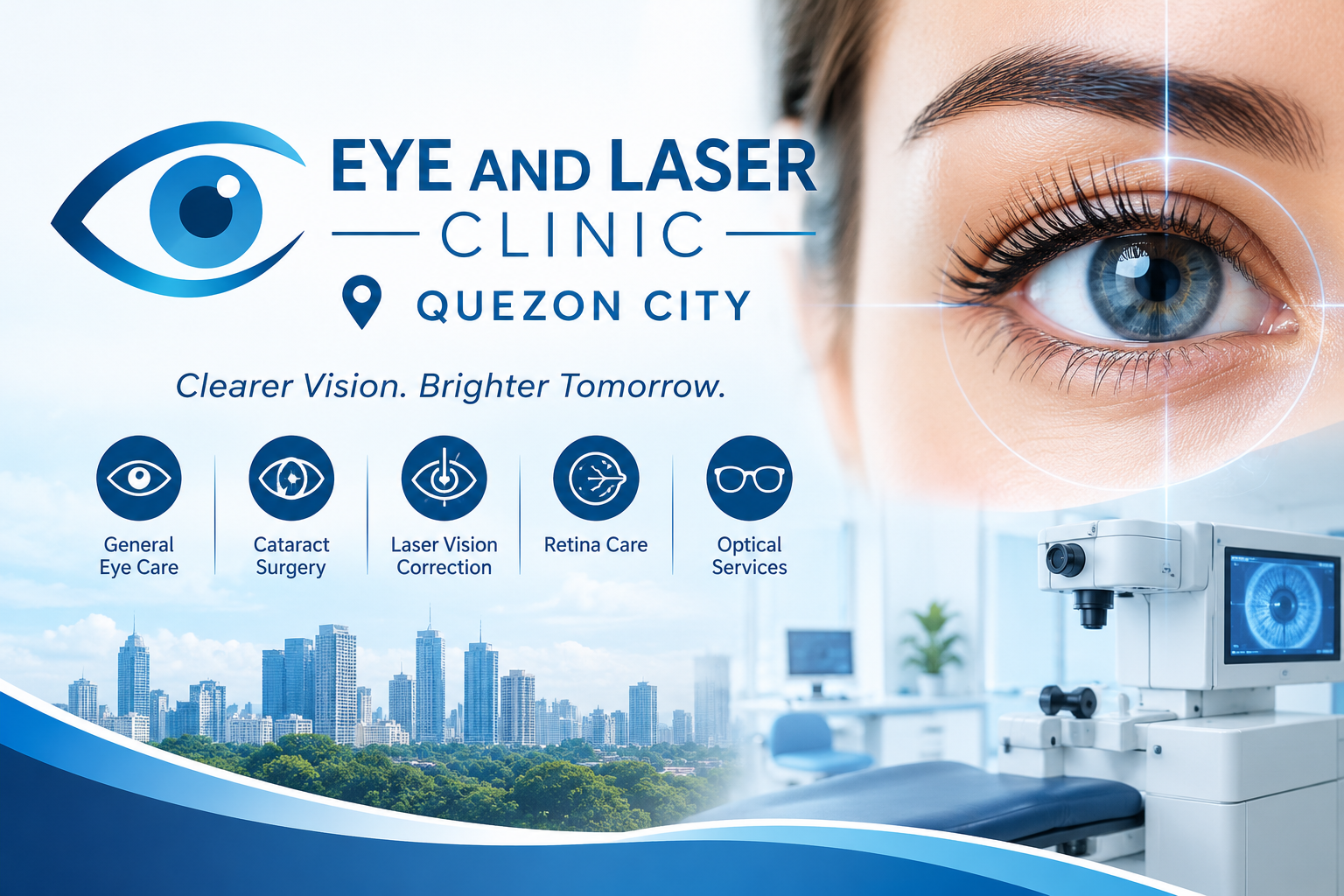
Clear vision plays an important role in how people work, study, travel, communicate, and manage everyday activities. When changes in eyesight occur, seeking professional eye care can help identify the possible cause and determine the most appropriate next step. An Eye and Laser Clinic Quezon City can provide access to ophthalmic examinations, diagnostic testing, specialist consultations, and selected laser-based treatments, depending on the facility. Quezon City has several eye-care facilities offering different combinations of examinations, diagnostic services, refractive procedures, and specialized treatment. For example, local facilities list technologies such as optical coherence tomography, visual field testing, corneal measurements, fundus imaging, and several laser procedures. Choosing an eye-care provider should involve more than considering location because professional qualifications, diagnostic capabilities, treatment options, and follow-up care can all affect the patient experience. Understanding what an eye and laser clinic provides can help patients make more informed decisions about their eye health.
Understanding an Eye and Laser Clinic in Quezon City
An eye and laser clinic is a specialized healthcare facility focused on evaluating, monitoring, and treating different conditions involving the eyes and visual system. Depending on the facility, services may include routine eye examinations, vision testing, diagnostic imaging, treatment planning, and laser-based procedures. An Eye and Laser Clinic Quezon City may serve patients experiencing blurred vision, changes in eyesight, eye discomfort, or other concerns that require professional assessment. Some facilities also have specialists who focus on particular areas such as corneal disease, refractive surgery, glaucoma, retina care, cataracts, or other ophthalmic conditions. Quezon City has established medical facilities with dedicated eye departments and laser-related services, including facilities that provide refractive surgery options. Patients should remember that the exact services available differ from one clinic to another. Checking the qualifications of the eye specialist and confirming that the facility provides the specific service needed are important steps before scheduling an appointment.
Why Regular Eye Examinations Matter
An eye examination is useful even when a person does not feel that anything is seriously wrong with their vision. Some eye conditions may develop gradually, allowing changes to occur before noticeable symptoms become severe. A professional examination can evaluate visual function while also allowing an eye specialist to assess the overall health of important eye structures. Depending on the patient’s situation, an examination may include visual acuity testing, refraction, eye pressure measurement, retinal assessment, or other diagnostic procedures. People with diabetes, a family history of certain eye conditions, previous eye problems, or changing vision may have additional reasons to seek regular professional monitoring. Early professional assessment can help determine whether a person simply needs vision correction, additional monitoring, or further diagnostic evaluation. Choosing an Eye and Laser Clinic Quezon City that can provide appropriate examinations can therefore be an important part of maintaining long-term eye health.
Eye Conditions That May Require Professional Evaluation
An ophthalmology clinic may evaluate a wide range of conditions affecting vision and eye health. Refractive errors such as nearsightedness, farsightedness, and astigmatism are common reasons people seek professional eye care. Presbyopia can also affect adults as they age, particularly when reading or performing tasks that require close vision. Cataracts may cause cloudy or blurred vision and can interfere with activities such as driving, reading, or recognizing faces. Glaucoma requires careful professional monitoring because changes involving the optic nerve can occur without obvious symptoms in some patients. Retinal conditions and diabetes-related eye problems may also require specialized examinations and diagnostic imaging. Because different eye conditions can produce similar symptoms, a qualified eye specialist should determine the cause rather than relying only on assumptions about the problem.
Diagnostic Services Available at Eye Clinics
Modern eye care can involve more than a basic vision chart and eyeglass prescription. Depending on the patient’s symptoms and medical history, an ophthalmologist may recommend specialized diagnostic tests to examine different parts of the eye. Optical coherence tomography, commonly known as OCT, can provide detailed images that help specialists evaluate structures such as the retina and optic nerve. Visual field testing can assess areas of vision that may not be detected through a standard visual acuity examination. Corneal thickness measurements and pachymetry can be particularly relevant when evaluating certain corneal conditions or considering refractive procedures. Fundus photography and other retinal imaging technologies can provide useful documentation of structures inside the eye. A Quezon City Eye Center, for example, lists OCT, pachymetry, automated visual field testing, fundus imaging, and several laser services among its available capabilities.
Understanding Laser Eye Care
The phrase laser eye care covers several different types of procedures, so patients should understand that laser treatment is not one single procedure. Some laser procedures are designed to correct certain refractive errors, while others are used to manage particular eye conditions. Laser vision correction may be considered by people who want to reduce their dependence on glasses or contact lenses. Other laser procedures may be recommended for specific problems involving the retina, glaucoma-related conditions, or other structures of the eye. Whether laser treatment is appropriate depends on the patient’s diagnosis, eye measurements, medical history, and the particular procedure being considered. A consultation with an ophthalmologist allows the specialist to determine whether laser treatment is suitable or whether another approach would be more appropriate. Patients should never assume that having a particular prescription automatically makes them a candidate for laser eye surgery.
Laser Vision Correction Options
Several types of refractive procedures may be available at specialized eye and laser facilities. LASIK is one commonly recognized option, while PRK and SMILE are other procedures that may be considered for appropriate patients. Each technique works differently and has its own eligibility requirements, recovery considerations, and potential risks. For example, St. Luke’s Vision Laser Service in Quezon City lists femtosecond bladeless LASIK and surface ablation procedures such as PRK among its refractive options. Some patients may not be suitable candidates for a particular laser procedure because of corneal characteristics, prescription strength, existing eye conditions, or other medical considerations. A detailed examination is therefore necessary before an ophthalmologist can recommend a specific technique. The goal should be selecting an appropriate treatment for the patient’s individual eye health rather than simply choosing the most widely advertised procedure.
Laser Treatments Beyond Vision Correction
Laser technology can also be used for purposes that are not related to reducing dependence on glasses or contact lenses. Certain laser procedures may be used in the management of specific retinal, glaucoma-related, or postoperative conditions. YAG laser procedures, for example, may be used for selected ophthalmic indications based on a specialist’s assessment. Retinal laser treatments may also be appropriate for certain retinal conditions when clinically indicated. Capitol Medical Center’s Eye Center in Quezon City lists YAG laser capsulotomy, YAG laser iridotomy, panretinal photocoagulation, focal laser argon treatment, and other laser services. These procedures have different purposes and should not be confused with elective laser vision correction. Patients should ask their ophthalmologist what a recommended laser procedure is intended to treat and why it has been selected. Understanding the purpose of treatment can make it easier for patients to follow their doctor’s recommendations and prepare for the next stage of care.
How to Choose an Eye and Laser Clinic Quezon City
Selecting an Eye and Laser Clinic Quezon City should begin with the qualifications and specialization of the ophthalmologist who will evaluate the patient. Patients should also consider whether the clinic has diagnostic equipment appropriate for their particular concern. A facility offering comprehensive examinations may be useful for patients who have symptoms that have not yet been clearly diagnosed. Those considering laser vision correction should verify whether the clinic provides the necessary pre-procedure measurements and postoperative monitoring. It is also helpful to ask how the clinic explains treatment alternatives, possible risks, expected recovery, and follow-up requirements. Convenience can matter as well because some procedures require more than one visit and postoperative monitoring may be necessary. Current clinic information, schedules, and available procedures should be confirmed directly with the facility because healthcare services and appointment arrangements can change.
What to Expect During an Eye and Laser Consultation
A first appointment generally begins with a discussion about the patient’s vision concerns, medical history, previous eye treatments, and current symptoms. The eye-care professional may then perform vision testing and other examinations based on the patient’s needs. Additional diagnostic procedures may be recommended when the initial assessment indicates that more information is necessary. Patients considering laser vision correction may undergo detailed measurements of the cornea and other aspects of eye health before a treatment decision is made. The ophthalmologist should explain whether the patient appears to be a suitable candidate and discuss available options when appropriate. Patients should use the consultation as an opportunity to ask about expected results, possible risks, recovery time, and follow-up care. Importantly, attending a consultation does not automatically mean that a patient needs laser treatment because the specialist may recommend glasses, medication, monitoring, surgery, or another approach depending on the findings.
Preparing for Laser Eye Treatment
Preparation for laser eye treatment depends on the specific procedure and the patient’s individual circumstances. Patients should provide the ophthalmologist with accurate information about medications, previous surgeries, existing eye conditions, and other relevant health concerns. Contact lens wearers may receive instructions about temporarily stopping lens use before certain examinations because accurate eye measurements are important. Patients should carefully follow all pre-procedure instructions provided by the treating clinic. It can also be helpful to arrange transportation when the procedure or temporary visual changes could make driving inappropriate. Before treatment, patients should understand what will happen during the procedure and what restrictions may apply afterward. Clear communication with the eye specialist can help patients approach treatment with realistic expectations and a better understanding of their responsibilities during recovery.
Recovery and Follow-Up After Laser Treatment
Recovery varies considerably depending on the type of laser procedure performed and the patient’s individual response to treatment. Some procedures may involve a relatively short recovery period, while others may require more time and closer monitoring. Patients should follow their ophthalmologist’s instructions regarding prescribed eye drops, medications, protective measures, and activity restrictions. Follow-up appointments are important because the specialist needs to monitor healing and assess the eye after treatment. Temporary visual changes or discomfort can occur with certain procedures, but patients should always ask their treating professional what symptoms are expected for their particular treatment. Any unusual, severe, or worsening symptoms should be reported promptly to the healthcare provider. Proper follow-up is an important part of laser eye care because successful treatment involves not only the procedure itself but also appropriate monitoring afterward.
Questions to Ask Before Choosing a Clinic
Patients can make their appointment more productive by preparing questions in advance. Ask which ophthalmologist will perform the examination and whether that specialist has experience with the particular eye concern being evaluated. Ask what diagnostic tests may be needed and whether those tests are performed at the same facility. If laser treatment is being considered, ask which procedure is recommended and why it is appropriate for the patient’s eyes. Patients should also ask about potential benefits, risks, alternatives, expected recovery, and follow-up appointments. It is reasonable to request a clear explanation of the total treatment cost and which services are included. Patients should also ask whether their HMO or insurance coverage applies to the consultation, diagnostic tests, medications, or procedure when relevant. These questions can help patients compare providers based on the quality and suitability of care rather than relying only on advertising or promotional pricing.
FAQ About Eye and Laser Clinic Quezon City
What services can an Eye and Laser Clinic Quezon City provide?
An Eye and Laser Clinic Quezon City may provide eye examinations, diagnostic testing, ophthalmology consultations, refractive services, and selected laser treatments. The exact services depend on the individual facility and its available specialists and equipment. Patients should contact the clinic directly to confirm whether it provides the service they need.
Is laser eye treatment suitable for everyone?
No, laser treatment is not automatically suitable for every patient. Eligibility depends on factors such as overall eye health, corneal characteristics, refractive error, age, medical history, and the specific procedure being considered. A comprehensive evaluation is needed before an ophthalmologist can make an appropriate recommendation.
What is the difference between LASIK and other laser procedures?
LASIK is a refractive procedure designed to correct certain vision problems by reshaping the cornea. Other laser procedures may have completely different purposes, including treating selected retinal or glaucoma-related conditions. The best option depends on the patient’s diagnosis and clinical measurements.
How do I know if I need an eye examination?
Changes such as blurred vision, difficulty seeing at night, frequent visual discomfort, or noticeable changes in eyesight can be reasons to schedule an examination. Routine eye evaluations can also be appropriate for people who have risk factors for eye disease. An ophthalmologist can determine how frequently a patient should be evaluated.
How should I choose an Eye and Laser Clinic Quezon City?
Consider the qualifications of the ophthalmologist, available diagnostic services, technology, treatment options, patient communication, safety practices, and follow-up care. Location and appointment availability can also be important, particularly when multiple visits are expected. Patients should verify current information directly with the clinic before scheduling.
Does every eye clinic provide laser treatment?
No. Eye clinics differ significantly in their services, equipment, specialists, and treatment capabilities. Some focus primarily on routine examinations and vision correction, while specialized facilities may offer refractive surgery or therapeutic laser procedures.
What happens during a laser consultation?
A laser consultation may involve reviewing medical and eye history, checking visual acuity, examining the eyes, and performing specialized measurements. The ophthalmologist may recommend additional diagnostic tests before determining whether a laser procedure is appropriate. Treatment options and expected recovery can then be discussed based on the findings.
Is laser vision correction permanent?
Laser vision correction can provide long-lasting changes for appropriately selected patients, but it does not stop normal age-related changes in vision. Some people may still develop presbyopia or other eye conditions later in life. Long-term eye examinations remain important even after successful refractive treatment.
Takeaway
Finding the right Eye and Laser Clinic Quezon City involves looking beyond the availability of laser technology. Patients should prioritize qualified ophthalmologists, comprehensive examinations, appropriate diagnostic equipment, individualized treatment planning, and reliable follow-up care. Laser treatment can be useful for selected vision and eye-health concerns, but it is not appropriate for everyone. A detailed professional assessment should come before any decision about refractive surgery or therapeutic laser treatment. Patients should also understand the purpose, benefits, potential risks, alternatives, recovery expectations, and costs associated with any recommended procedure. Asking detailed questions can make the consultation more productive and help patients make decisions based on their individual needs. With appropriate professional evaluation and ongoing eye care, patients can take a more informed approach to protecting their vision and maintaining healthy eyes.